


How to Build a Successful Sales Discovery Process in 2025-26
A winning sales strategy starts long before the pitch. The sales discovery process is the foundation that drives personalized solutions, builds trust, and ultimately closes deals faster. With buyers expecting a consultative experience, discovery isn't just a checklist, it's your competitive edge. Mastering the discovery process in sales is non-negotiable for growth.
This blog explores a complete blueprint for building a successful sales discovery process, enriched by insights from industry-leading blogs, Reddit discussions, and enhanced with Pepsales AI's capabilities. If you want to know how to build a sales process that wins, start here.
READ: Guide to B2B SaaS Sales Discovery Calls
Why Sales Discovery is the Foundation of B2B Success
Understanding the Role of Discovery in Modern Sales
The Sales Discovery Process is the initial phase in the sales cycle where a rep uncovers key insights about a prospect:
- Their goals, pain points, and workflows
- Whether they fit your Ideal Customer Profile (ICP)
- Who makes buying decisions, and what their timeline is
It's about asking the right questions, listening deeply, and aligning your solution to their challenges. Done right, the discovery in the sales process transforms prospects into high-intent, sales-ready leads. It’s what makes a successful sales discovery process possible, moving beyond a simple checklist.
The Impact of Effective Discovery on Conversion Rates
A great discovery process isn’t just a “nice to have” in sales, it’s the backbone of stronger deals, smarter pipelines, and faster revenue growth. Here’s why it matters:
- Improves Lead Qualification: A strong discovery framework helps your sales team spot high-quality leads early and avoid wasting time on poor-fit prospects. By uncovering key details like pain points, budget, timeline, and buying dynamics, reps can focus their efforts on deals that are truly likely to save time and boost productivity across the pipeline.
- Builds Trust & Credibility: Effective discovery isn’t just about asking questions, it’s about asking the right questions. When reps take the time to deeply understand a prospect’s goals, challenges, and internal dynamics, it shows they’re genuinely invested in offering solutions that work. This consultative approach strengthens the relationship, increases buyer confidence, and positions your brand as a trusted advisor not just another vendor.
- Fuels Personalization: Personalization has moved from being a competitive advantage to an absolute necessity. Buyers expect solutions tailored to their specific situation, not cookie-cutter pitches. A thorough discovery process gives you the intel needed to customize your approach, align value propositions with real needs, and deliver demos or proposals that resonate dramatically increasing win potential.
- Increases Conversions: Sales teams with standardized sales discovery best practices see significant increase in win rates. A well-structured discovery discipline ensures consistent prospect insights, better qualification, and smarter follow-ups, all of which directly impact deal closures. While the exact uplift can vary, the correlation between effective discovery and conversion success is undeniable.
Common Pitfalls in the Discovery Process
The most common mistakes that hinder a successful sales discovery process are:
- Talking more and not listening to the prospect
- Asking yes/no questions
- Skipping the budget discussion
- Not confirming next steps
Step-by-Step Guide to Run a Successful Sales Discovery Process in 2025-26
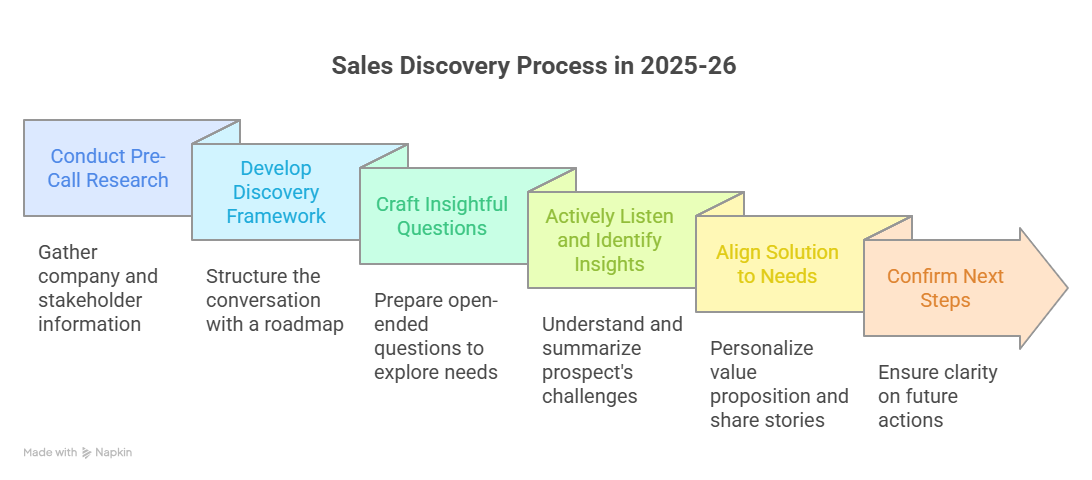
1. Conduct Thorough Pre-Call Research
Preparation is half the battle. Know the basics before you reach out:
- Company size, revenue, and funding status
- Key stakeholders from LinkedIn
- Recent news or product launches
- Competitors and tools used
With Pepsales AI: Use automated research to pull company intel, social mentions, and tech stack into a centralized view before every discovery call.
Explore Pepsales AI Co-Pilot to see how we streamline this step.
2. Develop a Structured Discovery Framework
Structure your sales discovery process using a robust sales discovery framework. This provides a roadmap for the conversation and is a core component of sales discovery best practices. A clear sales discovery process flowchart helps standardize the experience across your team.
3. Craft Open-Ended, Insightful Questions
The key to a powerful discovery process in sales is asking smarter discovery questions for sales.
Sample Questions:
- What goals are you aiming to hit this quarter?
- What's your biggest bottleneck right now?
- Who else is involved in this decision?
- Have you allocated a budget for a solution?
Pro Tip: Start broad, then go deep. Use open-ended questions to explore and closed ones to qualify. Crafting the right sales process discovery questions is essential.
With Pepsales AI: Access pre-built, customizable templates that guide reps through effective discovery conversations, ensuring your discovery questions for sales hit the mark every time.
4. Actively Listen and Identify Key Insights
A great discovery is about active listening. Echo and summarize their words to show understanding and confirm you've captured the essence of their discovery process sales challenges.
- Prospect: "Managing our pipeline across regions is a nightmare."
- Rep: "So, cross-regional pipeline visibility is causing misalignment. Did I get that right?"
With Pepsales AI: Use our conversation intelligence to:
- Track keywords, sentiment, and buying signals
- Get post-call summaries for coaching and personalization
5. Align Your Solution to Their Needs
Don't pitch, align. Based on the discovery in the sales process:
- Personalize your value proposition
- Share customer stories from similar use cases
- Show how your solution directly addresses their pain points
With Pepsales AI: Generate custom proposals and pitch decks in seconds based on the data gathered during discovery.
6. Next Steps and Follow-Up Actions
Always confirm what happens next. Not confirming the next step is a common mistake that ruins a discovery call and breaks the flow of your sales discovery process.
Best Practices for Enhancing Your Sales Discovery Calls
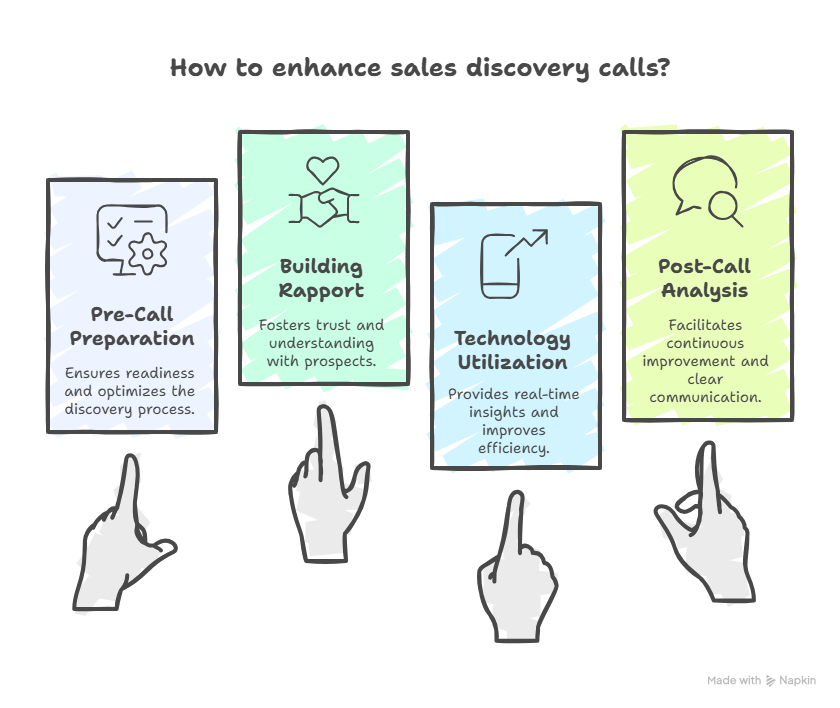
These are critical sales discovery best practices that distinguish top performers during the discovery stage of the sales process.
Pre-Call Preparation
- Prepare a discovery checklist before every call.
- Ensure all necessary information is logged in the CRM to optimize the entire discovery process sales.
Building Rapport and Trust
- Maintain a consultative, problem-solving mindset, not just a selling one.
- Ask genuine, empathetic sales process discovery questions about their challenges.
Utilizing Technology for Real-Time Insights
- Use call recording and analytics tools for real-time guidance during the call.
- Real-World Example: Spyne used Pepsales AI to automate discovery call analysis and intent tracking, cutting deal closure time by 40% and achieving 100% forecasting accuracy. Read: Spyne’s Success Story
Post-Call Analysis and Continuous Improvement
- Send clear post-call summaries and next steps to prospects.
- Use analytics for team coaching on improving the discovery stage of the sales process.
- Real-World Example: Rocketium used Pepsales AI to score and analyze past calls using MEDDIC, leading to a 2.7X improvement in discovery quality. Read: Rocketium’s Success Story
Common Mistakes to Avoid in the Discovery Process
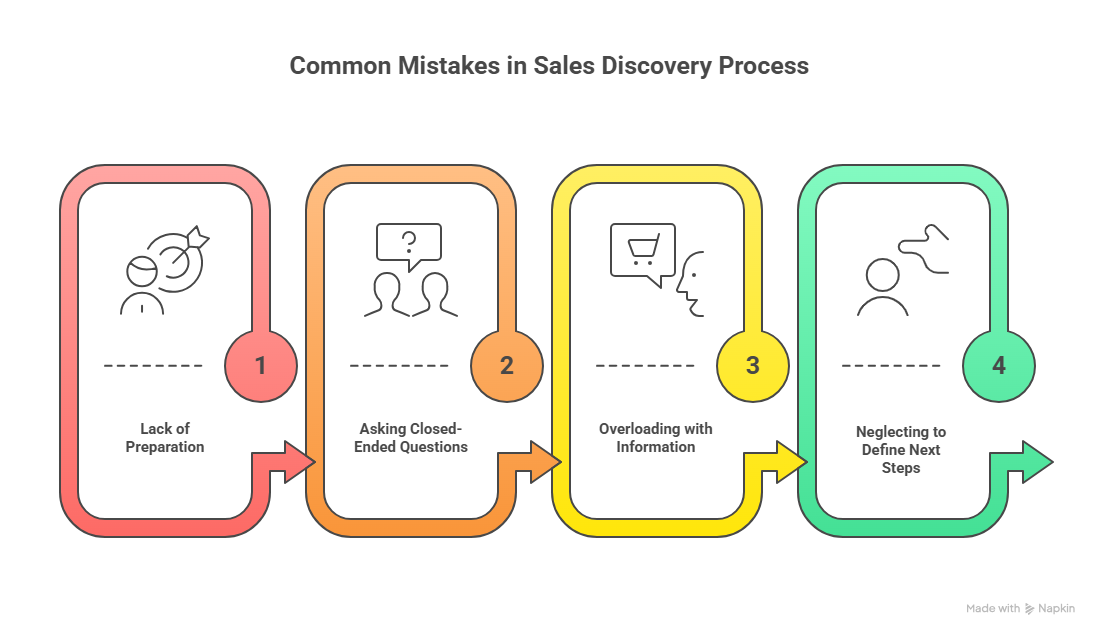
To ensure a successful sales discovery process, avoid these common traps.
Lack of Preparation
Failing to research the company, stakeholders, or basic pain points before the call, ignoring the initial step of any good sales discovery process flowchart.
Asking Closed-Ended Questions
Relying on yes/no questions that don't uncover the true implications of their problem. This is why a solid sales discovery framework is crucial.
Overloading with Information
Talking too much about your product's features instead of focusing on the prospect's needs in the discovery in sales process.
Neglecting to Define Next Steps
Ending a discovery call without a confirmed, scheduled next action, which is vital for any well-defined sales discovery framework.
READ: The Top 10 Sales Enablement Tools You Need in 2025
How Pepsales AI Enhances Your Discovery Process
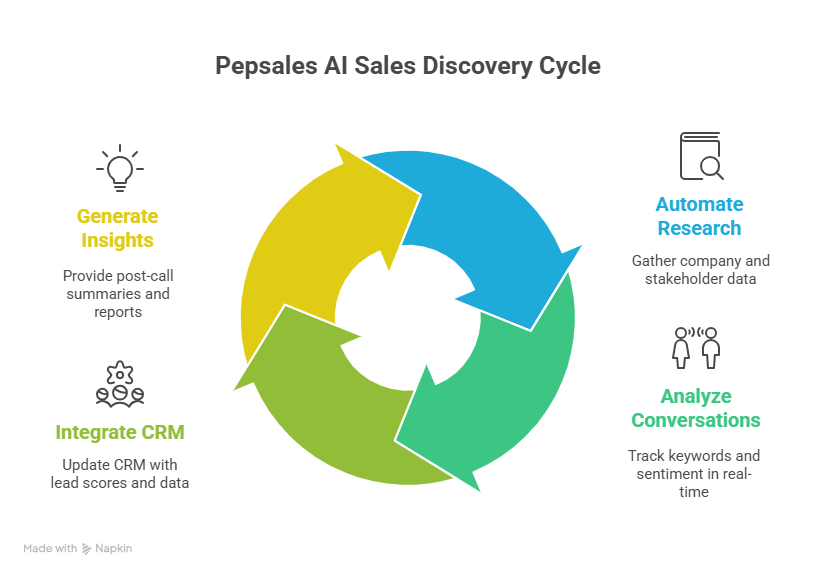
Pepsales AI is designed to make every sales discovery process more intelligent and effective.
Automated Research and Data Aggregation
Our AI provides all the necessary company, stakeholder, and tech stack information before the call, ensuring your reps follow sales discovery best practices from the start.
Real-Time Conversation Analysis
Track keywords, sentiment, and buying signals as they happen, enabling reps to pivot and ask the right discovery questions for sales at the perfect moment.
Seamless CRM Integration
Our tools automatically score and rank leads using frameworks like BANT and more, vital for the discovery stage of the sales process, and integrate data directly into your CRM.
Actionable Insights and Reporting
Get immediate post-call summaries, coaching points, and forecasting reports powered by conversation intelligence, helping you refine how to build a sales process for better outcomes.
Conclusion: Discovery Is the Key to Modern Sales
A structured, intelligent sales discovery process is the #1 factor in successful sales discovery process B2B selling. You can't afford to guess with attention spans shrinking and competition growing.
Pepsales AI empowers you to:
- Automate pre-call research
- Standardize discovery across your team
- Qualify and score better leads
- Close faster with AI-generated insights
Ready to Transform Your Sales Discovery and Win More Deals?
Schedule Your Free Pepsales AI Demo to see how Pepsales AI transforms your discovery process.
FAQs
Q1. What is the sales discovery process?
The sales discovery process is the foundational stage where reps investigate a prospect's urgent pain points, goals, and business challenges. Its main purpose is qualification: determining if the prospect is a good fit and gathering the insights needed to craft a hyper-personalized solution. Mastering this defines sales discovery best practices today.
Q2. What is the 7-step sales process?
While models vary, a common and effective 7-step sales process for B2B environments integrates discovery as a core early step:
- Prospecting
- Preparation/Research
- Discovery (Needs Assessment)
- Presentation/Demo
- Handling Objections
- Closing
- Follow-up/Nurturing
Q3. How to run a successful sales discovery call?
To run a successful sales discovery call: start with thorough research, set a clear agenda, and ask open-ended discovery questions for sales. Actively listen, qualify the lead using a framework like BANT, summarize their needs, and always secure a mutually agreed-upon next step to keep momentum.
Q4. What is a sales discovery framework?
A sales discovery framework is a structured methodology that provides a blueprint for running the discovery call, ensuring consistency and thoroughness across the sales team. Popular examples include:
- BANT (Budget, Authority, Need, Timeline)
- SPIN (Situation, Problem, Implication, Need-Payoff) and more.
Q5. Why is the discovery stage of the sales process so critical?
The discovery stage of the sales process is critical because it directly impacts win rates and sales efficiency. Effective discovery ensures that:
- You Qualify Out Bad Leads: Prevents the sales team from wasting time on deals with no budget or fit.
- You Personalize the Solution: Allows you to tailor the pitch, which dramatically increases the perceived value.
- You Build Trust: Shows the prospect you are genuinely interested in solving their problem, not just selling a product.


.avif)
.avif)
