


The digital sales and marketing world is in a state of tremendous evolution. As buyer expectations go up, generic outreach or one-size-fits-all campaigns lose their impact. In this manner, both B2B and B2C companies are striving for relevance, resonance, and real relationships. That's why "AI hyper-personalization sales" matters now: it shows an emerging trend that's not just about marketing buzz but search-worthy and increasingly essential for many businesses.
Leading the conversation about AI-driven personalization, Pepsales AI positions itself at the thought leadership forefront, bridging marketing vision with practical and data-driven sales execution.
What Is AI Hyper-Personalization vs. Traditional Personalization
Traditional personalization too often means segmentation: broad buckets like "tech-industry customers", "frequent buyers", or "enterprise leads". It's useful-but limited. That's where hyper-personalization comes in: leveraging AI, real-time data, behavioral signals, and predictive analytics to treat each individual customer as unique, delivering tailored messages, offers, and journeys.
Some of the key enablers are:
- Real-time behavioral data: website visits, past purchases, engagement history
- Predictive analytics and AI/ML to predict intent or needs
- Dynamic content or offers-emails, recommendations, outreach-that change based on the user
Thus, hyper-personalization goes beyond saying "Hi {FirstName}, here's our product" to "Hi Lisa, we noticed you browsed X and read about Y; based on that, this solution might address [her needs]."
The Reality: What AI Hyper-Personalization Delivers
Yet, there is solid data to back up the hype. Done right, AI-based hyper-personalization does considerably improve sales and customer engagement. For example:
- Personalization drives a 5-15% uplift in revenues for businesses and a 10-30% boost in marketing ROI.
- Personalized offers and experiences can bump up conversion rates upwards of ~30% compared with undifferentiated outreach.
- Personalized interactions engender deeper customer loyalty and drive repeat purchases, improving customer lifetime value.
- With AI, personalization is possible at scale: what would take dozens of human hours to do, such as analyzing behavior, segmenting users, and crafting personalized messages, can now be automated and scaled to deliver personalized experiences to hundreds or thousands of customers.
From a competitive standpoint, early adoption of AI hyper-personalization can yield a critical advantage: a reputation for relevance, customer-centricity, and responsiveness factors that matter when choices are abundant and attention is scarce.
The Hype and the Common Pitfalls
But hyper-personalization is not a magic wand. There are several challenges and potential downsides that are often underplayed by businesses.
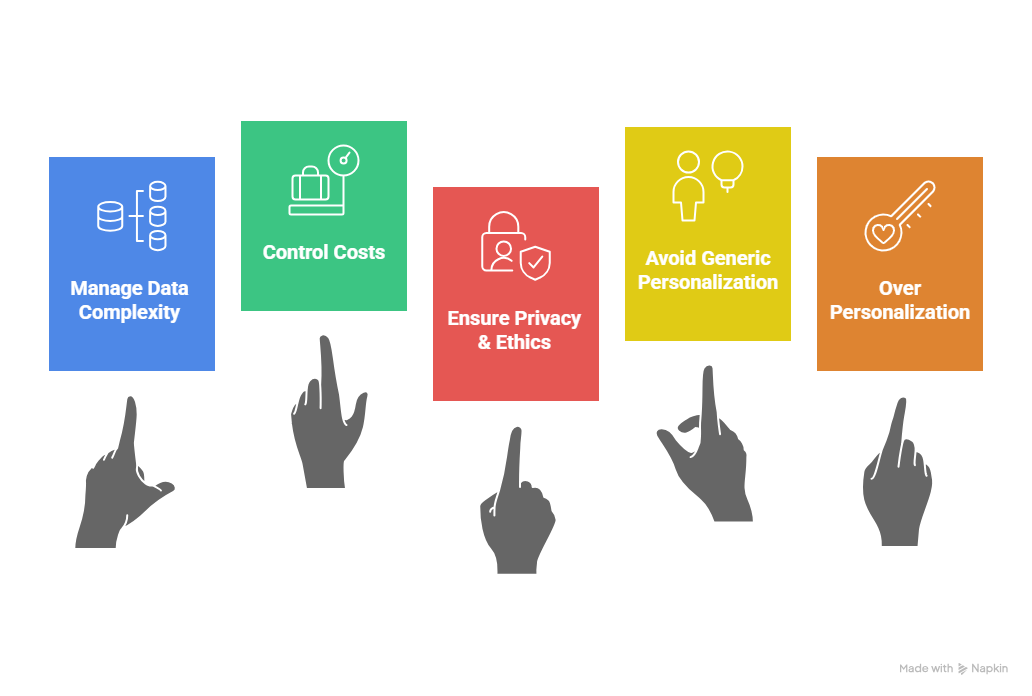
1. Data & Infrastructure Complexity
Delivering truly personalized experiences requires a unified, high-quality data infrastructure-integrating data from CRM, web behavior, purchase history, and engagement logs among others. Many companies have fragmented data (data silos), inconsistent data quality, or systems that don't talk to each other that make personalization at scale hard to achieve.
2. Cost, Talent & Technical Overhead
Setup of AI/ML pipelines, real-time personalization engines, dynamic content delivery all require investment, technical expertise, and maintenance. For most small or mid-size firms, that would be expensive or resource-intensive.
3. Privacy, Ethics and Customer Trust
It involves the gathering and usage of personal data and behavioral patterns, which raise concerns over privacy. Over-personalization may feel intrusive or "creepy" to customers. If done without transparency or consent, you risk eroding trust.
4. Risk of Being Generic Despite AI (“Personalization Fatigue”)
If AI-powered personalization reduces to just name-insertion or surface-level tweak, customers may sense automation rather than real attention. The magic is in the relevance and the value, not the personalization for its own sake. This is often less discussed, but a common failure mode.
5. Over-personalization, When Too Much Feels Wrong
There is a fine line: when personalization becomes so granular, so that it feels like surveillance-showing ads/offers based on browsing one did a few minutes ago-users feel invaded. That can turn into backlash or opting out.
What's Real and Realistic Strategic Guidance to B2B/B2C Sellers
If you are running or advising sales operations-especially SaaS, e-commerce, or service-based models-here is how you can realistically think about AI hyperpersonalization:
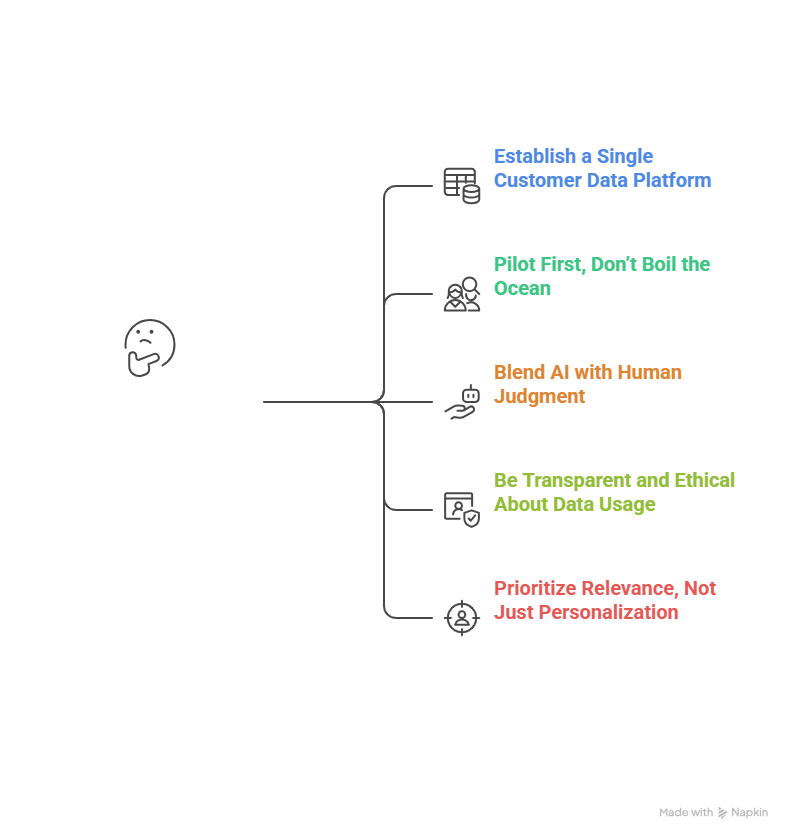
- Establish a single customer data platform: Integrate your sources of data, such as CRM, engagement, purchase history, and behavior. Without a "single source of truth," personalization efforts will be spotty or inconsistent.
- Pilot first, don’t boil the ocean: Test hyper-personalization in one channel, say emails or retargeting, or a segment of customers. Measure uplift, conversion, engagement before scaling broadly.
- Blend AI with human judgment: Use AI to surface signals, craft initial drafts, or highlight patterns but let human marketers/sales reps add context, tone, and empathy. This reduces the “automated / spammy” feel.
- Be transparent and ethical about data usage: In other words, let customers know what data you collect, why, and how it improves their experience. Clearly offer opt-out mechanisms. This builds trust and trust is a core driver of long-term loyalty.
- Prioritize relevance, not just personalization: Instead of striving for maximum behavioral granularity, focus on what truly adds value to the customer relevant guidance, timely offers, meaningful assistance.
Why This Matters for Pepsales AI and Where the Opportunity Lies
At Pepsales AI we stand at the juncture of marketing automation and sales enablement. Embracing AI hyper-personalization sales thoughtfully and strategically will allow us to:
- Help clients make more meaningful outreach that leads to higher conversion, retention, and lifetime value.
- Differentiate our offerings by combining tech + human insight: offer not only automation but smart, ethical, and context-aware personalization.
- Build our own thought leadership and credibility through the sharing of frameworks and best practices for scaling personalization, which are particularly essential to B2B SaaS clients and enterprises.
- Guide clients through trade-offs: balancing data-driven growth with privacy, personalization with trust.
In other words, this is not hype. AI hyper-personalization sales, when done right, is a real lever for growth. And for Pepsales AI, it is a strategic play: to shape the future of how sales and marketing converge.
Conclusion
AI hyper-personalization sales is more than a buzzword. It is a reflection of evolving customer expectations, technological maturity, and changing dynamics in sales/marketing. But it is also not a silver bullet. Real value comes not from just adopting AI but by doing so with data integrity, human empathy, ethical clarity, and strategic intent. For companies that strike this balance right-and for services such as Pepsales AI guiding them-hyperpersonalization isn't hype; it is the future of effective human-centered selling.
See how pepsales AI delivers real AI-driven personalization .
Book a live demo and watch how your sales team can personalize at scale with zero manual effort.


.avif)
.avif)
