


.avif)
Forecasting has always been the heartbeat of revenue planning yet it’s also the part most teams get wrong. Even well-run B2B SaaS companies struggle with inaccurate pipelines, optimistic reps, stale CRM entries, gut-driven calls, and last-minute surprises that blow up quarterly targets.
This AI forecasting case study breaks down how three different sales teams from early-stage startup to enterprise achieved measurable accuracy improvements (up to 35%), reduced variance, and built forecasts leadership could actually trust.
Why Forecasting Fails
Across all three teams, four patterns kept showing up:
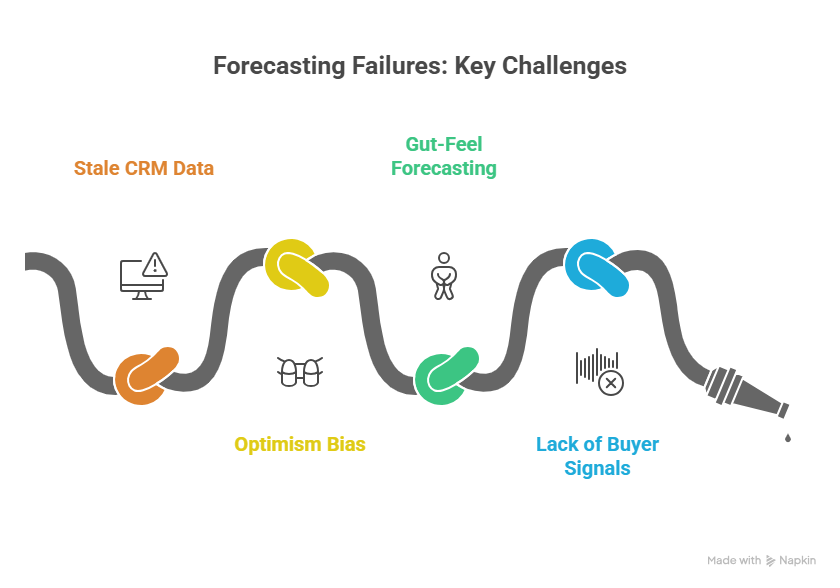
- Stale CRM data: 40–60% of opportunities had outdated next steps or missing context.
- Optimism bias: Reps overstated deal health due to pressure, subjectivity, or blind spots.
- Gut-feel forecasting: Managers relied on opinions rather than deal-level intelligence.
- Lack of buyer signals: Teams judged deals based on activity, not intent.
When your foundation is shaky, your forecast will be too no matter how experienced the team is.
Case Study 1: Mid-Market SaaS Company (120-Person Sales Team)
Problem: 28% Forecast Variance Every Quarter
This company struggled with late-stage slippage and “bubble deals” that stayed in the pipeline far too long. Managers lacked visibility into which deals were truly progressing.
AI Implementation
The team adopted AI that:
- Pulled buyer intent from emails, calls, and product behavior
- Scored deals based on risk factors (stalling, pricing delays, competitor mentions, etc.)
- Recommended next actions for reps
- Flagged deals likely to slip
Outcome
After 90 days:
- Forecast accuracy improved by 35%
- Late-stage slippage dropped by 22%
- Reps saved ~6 hours/week on updating CRM
Pipeline reviews shifted from storytelling to intelligence-driven discussions.
Case Study 2: Enterprise Sales Org (Annual Contracts $250K–$2M)
Problem: Too Much Human Bias in Forecasting
Enterprise deals involve long cycles and multiple stakeholders. Managers often relied on rep sentiment: “This deal feels good.”
The result? Forecast inconsistency across regions.
AI Implementation
The enterprise team rolled out AI models that:
- Analyzed historical win patterns
- Identified missing buying roles
- Flagged deals lacking multi-threading
- Projected win probability using thousands of data points
Outcome
Within 6 months:
- Accuracy increased by 31%
- Confidence in quarterly commits went up
- CFO reduced forecast buffer from 20% → 10%
Leadership gained the ability to see which deals were real vs. wishful thinking.
Case Study 3: Early-Stage Startup (8 Reps)
Problem: No Forecasting Process, Just Guesswork
The startup had high inbound volume but almost no forecasting discipline. Every month was unpredictable.
AI Implementation
Instead of building a forecasting process manually, they:
- Automated deal scoring
- Used AI to prioritize deals with highest close probability
- Added automated reminders for next steps, follow-ups, and deal hygiene
Outcome
In just 60 days:
- Forecast variance shrank from 40% → 15%
- Team hit quota 3 months in a row
- Leadership finally had clarity on predicted revenue
For them, AI became the forecasting process.
What Made the 35% Accuracy Improvement Possible?
Across all case studies, three elements made the biggest impact:
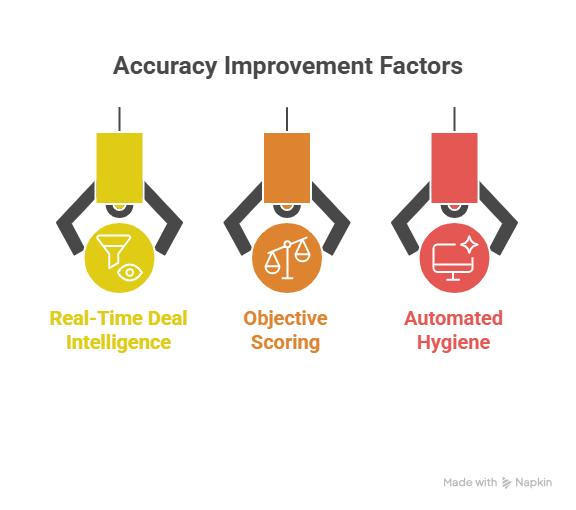
1. Real-Time Deal Intelligence
AI captured buyer intent signals the CRM missed emails, call transcripts, product usage.
2. Objective Scoring
AI removed rep optimism and made forecasts data-driven.
3. Automated Hygiene
CRM data finally stayed up to date, not because reps typed more, but because AI did the work.
Lessons for Revenue Leaders
If your forecast misses consistently by 10–30%, it’s not a pipeline problem, it's a visibility problem.
This AI forecasting case study proves:
- AI doesn’t replace managers; it equips them.
- Forecast accuracy increases when reps don’t have to manually maintain data.
- Deal reviews become sharper, shorter, and more strategic.
- AI turns sales forecasting from “best guess” into “data science.”
Where Pepssales AI Fits In
If your team wants the same results these companies achieved, Pepsales AI delivers the exact intelligence needed to:
✔ Analyze conversations for real buyer intent
✔ Auto-score deals using MEDDIC signals
✔ Detect blockers before deals slip
✔ Keep your CRM updated automatically
✔ Build a forecast based on verified data not subjective opinions
PepSales AI becomes the intelligence layer that turns your pipeline into a predictable revenue engine.
Final Takeaway
This case study makes one thing clear: forecasting accuracy improves the moment teams stop relying on gut feel and start relying on real buyer intelligence. With Pepsales AI analyzing conversations, risks, intent signals, and deal momentum, leaders finally see what’s truly happening inside the pipeline, not just what’s written in the CRM. Reps become more consistent, leaders make faster decisions, and forecast confidence rises across the board. The 35% improvement wasn’t luck; it was the result of replacing guesswork with observable data. For modern revenue teams, this is no longer optional; it’s the new standard.
Ready to reduce forecast variance and unlock intelligence hidden in your pipeline?
Book a demo with Pepsales AI and turn forecasting into a science not a guess.


.avif)
.avif)
